Wednesday, 23 November 2016

CHILD’S HEALTH: PNEUMONIA

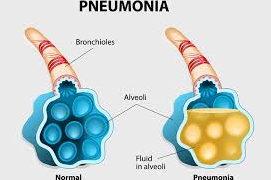
Pneumonia is an infection of the smallest airways of the lungs (alveoli). It can affect children of any age.


Cause

Pneumonia is usually caused by a virus, but can be caused by a germ.

Clinical features

The most striking features of pneumonia in children are a moist cough and a high fever. Sometimes the child is short of breath too and may complain of sharp pains in the chest on breathing deeply. Younger infants may just look very ill and breath rapidly, without having any other symptoms.

Investigations

Pneumonia can usually be diagnosed on clinical grounds, but your doctor may suggest a chest X-ray to confirm the diagnosis. Sputum and blood tests may also be helpful.

Treatment

Some types of pneumonia are due to bacteria which are responsive to antibiotics. It is difficult to distinguish between a viral and a bacterial pneumonia, so sometimes antibiotics are given just to be safe. If the illness is relatively mild, your child can be treated at home with oral medication, bed rest and paracetamol to lower the fever. Use a humidifier in your child’s room to make his breathing easier. Also make sure that your home is smoke-free.

If your child is very ill, admission to hospital may be advised, so that antibiotics can be given intravenously or by injection. Once treatment is commenced, recovery is usually rapid and complete.

When to see your doctor

• if your child has a cough and a high fever;

• if your young baby is listless and breathing rapidly;

• if there is no improvement after 3 days on antibiotics.

Take your child to hospital immediately if his lips look blue.

IMMUNE POWER DIET: AMINO ACIDS: YOUR ENERGY THERMOSTAT

Amino acids make your body’s energy thermostat—the way you absorb, digest and use protein, carbohydrates, fats, and sugars—run more smoothly. Ideally, our body should work to keep us on a smooth course of constant high energy and cheery moods. But for many people, it doesn’t work that way because imbalances in the body’s energy regulators cause periodic bouts of low blood sugar.In my opinion, this is one of the most common undiagnosed medical problems in this country. The medical term for it is reactive hypoglycemia.


 This means that instead of smoothly maintaining the constant sugar and protein balance we need, the body responds jerkily, flooding itself with sugar energy (“hyperglycemia,” or “high-sugar”) then abruptly slamming on the energy brakes (“hypoglycemia,” or “low sugar”). We all know people who are “touchy,” apt to fly off the handle, with what psychiatrists call “mood lability.” Often, such people are stuck on this “hyper-hypo” seesaw, victims of a faulty energy thermostat.People suffering reactive hypoglycemia may also be susceptible to every passing germ that comes along, and often plagued with hay fever, skin rashes, or allergies. In short, their erratic energy thermostat seems to go along with a weakened immune system. I am indebted to Dr. Jeff Bland, a noted nutritional researcher, for first bringing this constellation of symptoms to my attention.

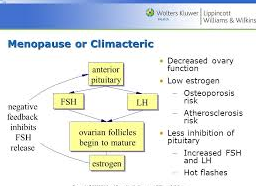
MENOPAUSE AND CLIMACTERIC

The end of the child-bearing period is the menopause. This is the second time in a woman’s life when the workings of the sex organs are greatly modified and produce disturbing symptoms. The first time is at puberty. I imagine that most girls are elated to feel that they are really becoming women and no longer need to dress in their mothers’ old dresses and play “grown up.” Hence they bear with equanimity some unpleasant aspects.

Difficulties with menstruation, the unpleasant symptoms of the menopause, and a few other situations may call for the use of sex hormones, but the frequency of their use is generally in inverse proportion to the knowledge of the physician who is prescribing them. The psychic effect is particularly difficult to separate in these cases, but we may remember that over several generations, when these hormones were not in use, a large fortune was made and maintained by dispensing only vegetable compounds for female troubles. The vegetables were inert physiologically and safer than the powerful hormones.
Women at their menopause, the “change of life,” do have an upsetting of their endocrine balance.

 In fact they have some upsetting at every menstrual period. Some have a great deal of disturbance every month, leading them to refer to the “curse.” But, at the time when these periods are ceasing and the whole hormonal system is readjusting, a woman is likely to have a lot of other things bother her, too. The menopause notifies her that she is losing her youthful charm – she is on the verge of becoming elderly. Naturally the psychic effect is bad. She is, in some cases, unnecessarily upset by the belief that she will soon lose her sexual attractiveness to her husband. This is not the case. She ceases to have a menstrual flow and to ovulate, but her other sexual functions and desires are unimpaired.

Along with the change of life other physical causes of discomfort become more common. X-rays demonstrate that practically everybody is then developing some arthritis, and arthritis often is uncomfortable. Pseudo-medical literature in modern abundance, and advertising, keep up the suggestion that the woman in the late forties is in for trouble. What Woman has not seen, in the advertising pages, photographs of her unhappy sisters who, she is told, look thus because of the change of life? It is a tribute to the female sex that, as far as a mere man is able to notice, most of them are able to show little change in their equanimity at this time.

The menopause is complete when the ovaries have ceased to perform their normal function. There are rare occasions when a woman may menstruate regularly for years and then abruptly cease for the rest of her life. Usually it is a gradual change, in reverse, to that which occurs at puberty. Most young girls do not immediately start into a normal menstrual cycle. They are irregular at first and it is well known that they are apt to have irritable, nervous symptoms as well as physical difficulties at that time. At the menopause the same irregularity and symptoms are the rule.

 The age at which it may occur is variable. Not too uncommonly it appears at about thirty-five, and two of my gynecological friends have told me that they thought the average age is over fifty. It frequently is difficult to say with certainty when the menopause is fully completed. If I may use an arbitrary figure, I should therefore say that any woman, who has ceased to menstruate for six months and then appears to start up again, should have a careful physical examination, as there are numerous bad conditions which may simulate menstruation.

Wednesday, 16 November 2016

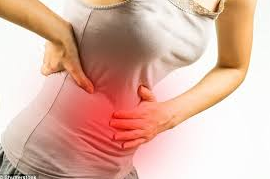
POISONING OF THE STOMACH AND INTESTINES – APPENDICITIS (GENERAL INFORMATION)

The appendix is a worm-shaped offshoot from the cecum, the blind intestine at the beginning of the ascending colon. It is this small tube which can become inflamed, the condition referred to as appendicitis, and is often removed surgically.

 The vermiform appendix is located exactly half way between the navel and the right iliac crest, the highest portion of the ilium and the pelvis. Imagine, for a moment, the face of a clock; if the navel were the centre, the small hand when it is on eight o’clock would then indicate the direction in which the appendix is located, exactly in the middle between the navel and the protruding hipbone.

Occasionally, an inflammation of the ovary (Novartis) on the right side is mistaken for an attack of appendicitis. When the area of the appendix is depressed by the hand and suddenly released, the sensation of pain is radiated to the right, whereas in the case of ovaritis the pain would be local and of a dull nature. Appendicitis may also be diagnosed through the rectum. It generally makes itself known through severe, sudden pain in the right lower portion of the abdomen, appearing without warning and usually accompanied by malaise and vomiting. As a rule the tongue is coated and the patient runs a slight temperature of 37.5-38 °C (99.5-100.4 °F). If the diagnosis is difficult, the physician may also take a blood test to determine whether the number of white blood cells has increased. In cases of inflammation the usual number of 6,000-9,000 may have jumped to 15,000, and the pulse rate also climbs above 100.

THE EXPLANATION FOR LINGERING BACTERIAL PROSTATITIS

One of the explanations for lingering bacterial prostatitis may be the presence of infection in tiny stones, called calculi, in the prostate. Prostatic calculi (the prostate’s version of gallstones or kidney stones) are quite common—about 75 percent of middle-aged men and 100 percent of elderly men have them. They can be detected with an imaging process called transrectal ultrasound.

 They’re usually small, found in grapelike clusters, and, most important, harmless. But when they get infected—as they often do in men with chronic bacterial prostatitis—prostatic calculi can cause an infection to persist, and symptoms of urinary tract infections and prostration to return again and again. (What causes calculi? Molecular analysis has shown that these stones contain ingredients generally found in urine but not prostatic secretions—which suggests they form when urine somehow “backs up,” or refluxes, into the prostate.)

When a man has both prostatic stones and a history of chronic bacterial prostatitis, it’s pretty safe to assume that the stones are infected. The significance of this is that infected calculi have never been cured by medication alone, although antibiotics can certainly treat the symptoms. The only way to cure infected prostatic stones permanently is to remove them surgically, by a procedure known as transurethral resection of the prostate.

Wednesday, 9 November 2016

HERPES SIMPLEX VIRUS: PATHOGENESIS AND CLINICAL PRESENTATION

Herpes simplex virus (HSV) encephalitis due to HSV type 2 occurs in babies infected perinatally. However, HSV type 1 is the most common cause of acute non-epidemic viral encephalitis among healthy children (older than 6 months of age) and adults. The estimated frequency of HSV type 1 encephalitis in the United States is 1 in 250,000 to 1 in 500,00 persons per year.

 This encephalitis has no seasonal preference and can occur at any time of the year. In the absence of therapy, the mortality rate exceeds 70%, and only 2.5% of patients overall (11% of survivors) regain normal function. Early treatment is the most important factor in ameliorating the morbidity and mortality of this infection.

Pathogenesis

Encephalitis with HSV type 1 can be due either to reactivation of virus or to primary infection. Approximately one third of patients develop HSV type 1 encephalitis during primary infection, and approximately two thirds acquire the disease through reactivation. Reactivation of latent HSV type 1 in the trigeminal ganglion leads to active replication of virus with subsequent spread directly to the temporal cortex. Primary HSV type 1 encephalitis results from either intranasal inoculation with direct invasion of the olfactory tract or from oral inoculation with spread along the trigeminal nerve. Whether primary infection or reactivation, the clinical syndromes are identical, producing inflammation and necrotizing lesions in the inferior and medial temporal lobes arid orbital-frontal cortex.

Clinical Presentation

HSV type 1 encephalitis typically has an abrupt onset, although an insidious, subacute presentation has been reported.

Fever is almost always present, and headaches are prominent early in the disease course. More than 90% of patients have signs that suggest a localized lesion in one or both temporal lobes, and this localization often takes the form of intense personality changes. Seizures, hemiparesis, visual field defects, and paresthesias may also be present. Symptoms often take 2 to 3 weeks to reach maximal severity, and some patients can progress rapidly to coma and death. Coexistent oral herpetic lesions are rare in HSV type 1 encephalitis.

WHAT SIDE-EFFECTS MIGHT I EXPECT IN USING ST JOHN’S WORT?

The best data base on side-effects comes from a large German study in which over 3,000 patients on St John’s Wort were monitored by their doctors, over 650 of whom participated in the survey. Only 48 patients (about 1.5 per cent) discontinued the medication in the study, and side-effects were reported by only 79 people (2.4 per cent). Of these side-effects, the most commonly reported problems were gastro-intestinal irritation, restlessness and allergic reactions, all of which were reported by fewer than 1 per cent of individuals. European experts whom I have interviewed about St John’s Wort side-effects agree with these very low percentages. Such low side-effect frequencies are especially good news for the treatment of depression in the elderly, who are typically highly susceptible to the side-effects of all sorts of medications.

Although time will tell whether the initial observations of such low frequencies of side-effects are correct, I have been impressed in my own clinical practice by the absence of any side-effects in some people who have proven to be highly sensitive to side-effects from a wide variety of other anti-depressants. It seems likely that St John’s Wort will indeed prove to have fewer side-effects than the synthetic anti-depressants currently in use.

As noted above, anyone with a history of hypomanic or manic episodes should be especially vigilant for the typical symptoms of activation after starting any anti-depressant. Sleeplessness, racing thoughts, pressured speech and euphoria or irritability are early warning signs of hypomania or mania that must be heeded. If these develop, you should stop St John’s Wort immediately and consult a doctor. The loss of sleep (which is often not experienced as unpleasant but rather as an extra opportunity to get more accomplished or have more fun) is harmful in itself as it can fuel the manic process. If caught early, the symptoms of hypomania or mania can often be checked with appropriate actions; if not, however, they can escalate into mania, which can be very unpleasant and damaging.

A few of my patients have developed increased anxiety after beginning St John’s Wort. Such reactions have also been reported to occur in certain individuals after starting all forms of antidepressants. People with a history of panic attacks or extreme anxiety are especially susceptible in this regard. Yet anti-depressants have actually been given for the treatment of anxiety and panic. In order to overcome the initial anxiety response, which may occur after taking even a single dose, it is necessary to back down on the dosage. For example, in treating such sensitive patients with Prozac I have often started with as little as 1 to 2 mg of liquid Prozac per day. After the person has become used to that dosage, it is then possible to increase the dosage slowly and carefully over the ensuing weeks until a therapeutic level is reached. If you are eager to persevere with St John’s Wort but happen to develop anxiety after taking 300 or 600 mg, it is possible to overcome the problem by obtaining an herbal extract in the form of an elixir. Begin by taking very low dosages of the elixir (say one-tenth of the recommended number of drops) and increase gradually at a rate that you can comfortably tolerate until you reach therapeutic levels.

Some people on St John’s Wort have complained about increased sensitivity to sunlight both with regard to the skin, with more reddening occurring than usual, and the eyes. At this time there is no reason to believe that either of these side-effects is of clinical concern, but if they cause discomfort, protecting your skin with sun block or the eyes with sunglasses would be a sensible preventative measure.