Wednesday, 30 November 2016

THE SELF-POISONER: PATTERNS OF SELF-INDUCED TOXICITY – HELEN-LOUISE’S CASE

Helen-Louise is a self-poisoner. To others in her world she is a "wonderful person"—always doing things for everyone. She is conscientiously and deeply devoted to her husband and three children.


As she walks into the office for her first consultation, Helen-Louise forces a smile that scarcely covers the pain and tension her wrinkled brow reveals. She sits down struggling to maintain her composure, looks at the doctor, forces another smile, and makes a trite joke about needing to talk to a head-shrinker. The doctor waits for her to proceed. The silence is too overwhelming; she cannot play her game any longer and bursts into tears. A few minutes later, she begins to talk.

H-L: "I can’t stand it any longer. I feel like I’m being used up by my family. They always want something from me. I never have a moment’s peace. Every time I talk to my husband, one of the children breaks into the conversation. They even barge into our bedroom and insist on being there with us. My husband feels too guilty to say anything about it. I can’t stand the looks on their faces when I tell them that their father and I want to be alone. My son is constantly demanding something. As soon as I do one thing for him, he is after me to do something else. They keep me so busy I no longer have any time to do what I want to do. My husband and I have no chance to talk, and I feel we are growing apart. Lately, I find myself resisting his sexual advances, and I don’t understand it at all—I love my husband. Yet I know I’m becoming increasingly irritated with him and the children. I feel very guilty when I find myself wishing the children were all grown up so that I could be alone with my husband. I know they love me, but I’m beginning to resent everyone and everything in that house—as if it were poison. Sometimes I feel as if 111 die if this keeps on."

The "problem" that Helen-Louise brought to the psychologist’s office is a case in point. While she lived within the potentially nourishing atmosphere of a family that loved and cared about one another, she poisoned herself by playing "victim” to the toxic manipulations of her children. The fact that she was unaware of the deadly games in which she participated did not make their toxic effects any less devastating to her well-being and her ability to nourish both herself and her family.

Tuesday, 29 November 2016

ACNE

Just about everyone gets it at one time or another

Acne vulgaris refers to a spectrum of skin eruptions — blackheads, whiteheads, pimples, cysts and nodules — that can be sore, painful or itchy. Few people escape adolescence without a pimple or two.
Acne begins when a fatty oil, called sebum, and dead cells are manufactured too quickly and clog the pores around small hair follicles. The results can range from whiteheads to blackheads and pimples.
Acne tends to occur in areas where there are high concentrations of these sebaceous glands — the face, neck, shoulders, and upper and center back. In both sexes, elevated secretion of androgen hormones during puberty stimulates these glands to produce extra sebum, increasing the likelihood of acne.

What you can do

PRACTICE SMART PERSONAL HYGIENE

Use a cleansing agent or soap that dries the skin enough to cause minor shedding (avoid too much drying since this can cause further irritation).
Use a clean washcloth — gently.

Never scrub the skin. If acne is not too severe (skin is not infected, pussy or raw), cleansing with a gentle abrasive such as Buff-Puff may help.
Always rinse thoroughly.

Give yourself an occasional mini-steam bath by placing a warm, wet towel on your skin for 10 to 15 minutes. This will help open pores and allow deeper cleaning.

For infants with acne, wash the face daily with a clean cloth, water and mild soap.

SKIN MEDICATIONS

Acne medications unblock pores by drying up oil and promoting peeling. Many are available without a prescription and come in solutions that help cover up redness and scarring. Sunlight may temporarily clear up skin, but it can have other damaging effects — especially if drying agents or antibiotics are being used.

A doctor can prescribe stronger versions of topical skin medications or a special formulation of vitamin A, called retinoic acid (Retin-A), and antibiotics. Vitamin A also may be prescribed for severe cases and should be taken only as directed by your doctor — too much of it can be toxic.
Final notes

Carefully follow the directions, warnings and precautions on any drugs you use. Call your doctor if you have questions. And be patient — it may take two to six weeks or more to see progress with any of these self-care treatments or medications.

Thursday, 24 November 2016

AGGRESSION AS A CAUSE OF ANXIETY

We all have a certain amount of aggression within us. If we didn’t, we would not succeed as a species or as individuals. Man’s aggression has led him to master the other animal species, and has to a large extent enabled him to control his immediate environment. However, the way in which man has progressed toward civilization has of itself imposed great restriction on his native aggression.

 He no longer has the opportunity to vent open aggression on animals that threaten him, or on a neighbouring tribe who would take his food or his woman, nor can he turn his aggression on weaker members of his own kin and take what they have for himself. In our present evolutionary state man is struggling to control the aggressive impulses that are still within him. This struggle with our own aggression is one of the greatest causes of tension. In many ways it is even more difficult to cope with than sexual problems, because while we usually have some awareness of our sexual difficulties, the struggle to control our aggressions may make us tense without us having any knowledge as to the cause of the tension.

A man of middle age came to see me for a skin rash which he had had on and off in front of his elbows and behind his knees for almost twenty years. He had had a lot of illness as a child which had left him undersized and with a bent back.

From the beginning he took charge of the interview. He was aggressive in his attitude, and rather contemptuous in his references to all the past failures of medical treatment. He mentioned that his family called him aggressive. He said that he loses his temper and blows up with his children, and then feels sorry for it. He added that he often drank heavily from sheer impatience and boredom. His wife disclosed that he really terrorized people—not only herself and the children, but other members of the family, and his friends at his place of work. The condition of his skin would wax and wane according to his state of frustration.

His aggression resulted from an inferiority complex, a reaction to compensate for his small size and weakly appearance. The anxiety engendered by his efforts to control his aggression had caused the skin condition.

Because he was so tense and aggressive it took him some time to learn how to relax, but when he did, his skin cleared up. A report from his wife indicated that those around him had come to have a happier time.

Wednesday, 23 November 2016

CHILD’S HEALTH: PNEUMONIA

Pneumonia is an infection of the smallest airways of the lungs (alveoli). It can affect children of any age.


Cause

Pneumonia is usually caused by a virus, but can be caused by a germ.

Clinical features

The most striking features of pneumonia in children are a moist cough and a high fever. Sometimes the child is short of breath too and may complain of sharp pains in the chest on breathing deeply. Younger infants may just look very ill and breath rapidly, without having any other symptoms.

Investigations

Pneumonia can usually be diagnosed on clinical grounds, but your doctor may suggest a chest X-ray to confirm the diagnosis. Sputum and blood tests may also be helpful.

Treatment

Some types of pneumonia are due to bacteria which are responsive to antibiotics. It is difficult to distinguish between a viral and a bacterial pneumonia, so sometimes antibiotics are given just to be safe. If the illness is relatively mild, your child can be treated at home with oral medication, bed rest and paracetamol to lower the fever. Use a humidifier in your child’s room to make his breathing easier. Also make sure that your home is smoke-free.

If your child is very ill, admission to hospital may be advised, so that antibiotics can be given intravenously or by injection. Once treatment is commenced, recovery is usually rapid and complete.

When to see your doctor

• if your child has a cough and a high fever;

• if your young baby is listless and breathing rapidly;

• if there is no improvement after 3 days on antibiotics.

Take your child to hospital immediately if his lips look blue.

IMMUNE POWER DIET: AMINO ACIDS: YOUR ENERGY THERMOSTAT

Amino acids make your body’s energy thermostat—the way you absorb, digest and use protein, carbohydrates, fats, and sugars—run more smoothly. Ideally, our body should work to keep us on a smooth course of constant high energy and cheery moods. But for many people, it doesn’t work that way because imbalances in the body’s energy regulators cause periodic bouts of low blood sugar.In my opinion, this is one of the most common undiagnosed medical problems in this country. The medical term for it is reactive hypoglycemia.


 This means that instead of smoothly maintaining the constant sugar and protein balance we need, the body responds jerkily, flooding itself with sugar energy (“hyperglycemia,” or “high-sugar”) then abruptly slamming on the energy brakes (“hypoglycemia,” or “low sugar”). We all know people who are “touchy,” apt to fly off the handle, with what psychiatrists call “mood lability.” Often, such people are stuck on this “hyper-hypo” seesaw, victims of a faulty energy thermostat.People suffering reactive hypoglycemia may also be susceptible to every passing germ that comes along, and often plagued with hay fever, skin rashes, or allergies. In short, their erratic energy thermostat seems to go along with a weakened immune system. I am indebted to Dr. Jeff Bland, a noted nutritional researcher, for first bringing this constellation of symptoms to my attention.

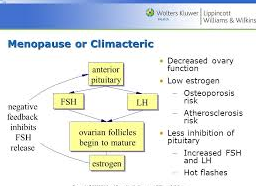
MENOPAUSE AND CLIMACTERIC

The end of the child-bearing period is the menopause. This is the second time in a woman’s life when the workings of the sex organs are greatly modified and produce disturbing symptoms. The first time is at puberty. I imagine that most girls are elated to feel that they are really becoming women and no longer need to dress in their mothers’ old dresses and play “grown up.” Hence they bear with equanimity some unpleasant aspects.

Difficulties with menstruation, the unpleasant symptoms of the menopause, and a few other situations may call for the use of sex hormones, but the frequency of their use is generally in inverse proportion to the knowledge of the physician who is prescribing them. The psychic effect is particularly difficult to separate in these cases, but we may remember that over several generations, when these hormones were not in use, a large fortune was made and maintained by dispensing only vegetable compounds for female troubles. The vegetables were inert physiologically and safer than the powerful hormones.
Women at their menopause, the “change of life,” do have an upsetting of their endocrine balance.

 In fact they have some upsetting at every menstrual period. Some have a great deal of disturbance every month, leading them to refer to the “curse.” But, at the time when these periods are ceasing and the whole hormonal system is readjusting, a woman is likely to have a lot of other things bother her, too. The menopause notifies her that she is losing her youthful charm – she is on the verge of becoming elderly. Naturally the psychic effect is bad. She is, in some cases, unnecessarily upset by the belief that she will soon lose her sexual attractiveness to her husband. This is not the case. She ceases to have a menstrual flow and to ovulate, but her other sexual functions and desires are unimpaired.

Along with the change of life other physical causes of discomfort become more common. X-rays demonstrate that practically everybody is then developing some arthritis, and arthritis often is uncomfortable. Pseudo-medical literature in modern abundance, and advertising, keep up the suggestion that the woman in the late forties is in for trouble. What Woman has not seen, in the advertising pages, photographs of her unhappy sisters who, she is told, look thus because of the change of life? It is a tribute to the female sex that, as far as a mere man is able to notice, most of them are able to show little change in their equanimity at this time.

The menopause is complete when the ovaries have ceased to perform their normal function. There are rare occasions when a woman may menstruate regularly for years and then abruptly cease for the rest of her life. Usually it is a gradual change, in reverse, to that which occurs at puberty. Most young girls do not immediately start into a normal menstrual cycle. They are irregular at first and it is well known that they are apt to have irritable, nervous symptoms as well as physical difficulties at that time. At the menopause the same irregularity and symptoms are the rule.

 The age at which it may occur is variable. Not too uncommonly it appears at about thirty-five, and two of my gynecological friends have told me that they thought the average age is over fifty. It frequently is difficult to say with certainty when the menopause is fully completed. If I may use an arbitrary figure, I should therefore say that any woman, who has ceased to menstruate for six months and then appears to start up again, should have a careful physical examination, as there are numerous bad conditions which may simulate menstruation.

Wednesday, 16 November 2016

POISONING OF THE STOMACH AND INTESTINES – APPENDICITIS (GENERAL INFORMATION)

The appendix is a worm-shaped offshoot from the cecum, the blind intestine at the beginning of the ascending colon. It is this small tube which can become inflamed, the condition referred to as appendicitis, and is often removed surgically.

 The vermiform appendix is located exactly half way between the navel and the right iliac crest, the highest portion of the ilium and the pelvis. Imagine, for a moment, the face of a clock; if the navel were the centre, the small hand when it is on eight o’clock would then indicate the direction in which the appendix is located, exactly in the middle between the navel and the protruding hipbone.

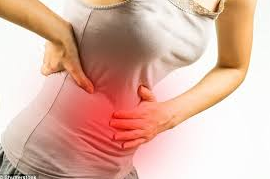
Occasionally, an inflammation of the ovary (Novartis) on the right side is mistaken for an attack of appendicitis. When the area of the appendix is depressed by the hand and suddenly released, the sensation of pain is radiated to the right, whereas in the case of ovaritis the pain would be local and of a dull nature. Appendicitis may also be diagnosed through the rectum. It generally makes itself known through severe, sudden pain in the right lower portion of the abdomen, appearing without warning and usually accompanied by malaise and vomiting. As a rule the tongue is coated and the patient runs a slight temperature of 37.5-38 °C (99.5-100.4 °F). If the diagnosis is difficult, the physician may also take a blood test to determine whether the number of white blood cells has increased. In cases of inflammation the usual number of 6,000-9,000 may have jumped to 15,000, and the pulse rate also climbs above 100.